Thinking about Hillcrest as more than a place to visit? A single weekend here can tell you a lot about what daily life might feel like, from coffee runs and market stops to easy walks and lively evenings. If you are comparing San Diego neighborhoods and want a clearer picture of Hillcrest’s rhythm, this guide will help you experience the area like a future local. Let’s dive in.
Why Hillcrest Feels Different
Hillcrest sits within Uptown, just north of Downtown San Diego and near both Balboa Park and Presidio Park. The City describes it as one of San Diego’s most distinct older neighborhoods, with award-winning restaurants, trendy stores, medical offices, two major hospitals, and the city’s largest concentration of LGBTQ-owned businesses.
That mix shapes the neighborhood in a very specific way. Instead of spreading daily life across long drives, Hillcrest centers much of it around a pedestrian-oriented commercial core along Fifth Avenue and University Avenue, where mixed-use buildings and active streets support a more connected, urban lifestyle.
Start With the Streets
If you want to understand Hillcrest, start by walking it. The neighborhood’s core is designed around movement on foot, with shops, dining, services, and gathering spaces woven closely together.
For many future buyers, that is the real draw. Hillcrest often feels less like a conventional suburb and more like an urban village where errands, brunch, and social plans can fit into the same part of your day.
Fifth and University Set the Tone
The area around Fifth Avenue and University Avenue gives you the clearest sense of Hillcrest’s pace. This is where you can see the neighborhood’s mix of local business activity, older character, and dense street life all at once.
As you explore, pay attention to how much is happening within a short distance. That convenience can be a major factor if you want a San Diego neighborhood where daily life feels more immediate and less car-dependent.
A Weekend Itinerary for Future Locals
One of the best ways to evaluate Hillcrest is to spend a weekend following the kind of routine you might actually keep if you lived there. A realistic flow is simple: coffee or brunch, a market stop, some time in nearby public space, and then dinner or evening plans.
That pattern fits the neighborhood well because Hillcrest is organized around local businesses, public events, and active street life. You are not forcing a lifestyle onto the area. You are observing the one the neighborhood already supports.
Saturday: Walk, Browse, Get Oriented
Start your Saturday with a slow walk through the commercial core. This gives you time to notice the storefront rhythm, the residential side streets just beyond the busiest blocks, and how the neighborhood shifts from energetic to more tucked-away within a short distance.
As you move around, you will likely notice a wide range of building types. The City describes Hillcrest as a place where older homes mix with newer upscale apartments and condominiums, which is useful context if you are trying to picture your housing options here.
Sunday: Build the Day Around the Market
The Hillcrest Farmers Market is one of the neighborhood’s strongest weekly anchors. The City’s 2026 event listing places it on Sundays from 9 a.m. to 2 p.m. on University Avenue between Herbert Street and Park Boulevard, with additional Center Street closures during market hours.
The market includes produce, meat, seafood, dairy, prepared foods, specialty items, art, jewelry, and clothing. According to the Hillcrest Business Association, it draws more than 10,000 visitors each Sunday, which makes it more than a shopping stop. It is one of the clearest windows into Hillcrest’s social energy and neighborhood identity.
Add a Nearby Green Space Reset
A walkable urban district often feels more livable when green space is close by, and Hillcrest benefits from that balance. Uptown sits near Balboa Park and Presidio Park, and nearby University Heights includes Trolley Barn Park.
If you are spending the weekend as a future local, this is a good moment to test the lifestyle honestly. After time on active commercial streets, step into a nearby park area and ask yourself whether the blend of density and open space feels right for you.
Public Space Shapes Daily Life
Hillcrest’s appeal is not limited to restaurants and retail. The neighborhood’s public realm plays a major role in how it feels on a day-to-day basis.
The Hillcrest Business Association describes Pride Promenade as a community space and a hub for pedestrian and bicycle transit, including Pride Plaza at Harvey Milk Street and University Avenue, public art, shade structures, and a bike-lane connection. At the same time, the association notes that the site remains under construction and that the public plaza is a 2026 project, so current access and programming should be verified before you plan around it.
An Evolving Neighborhood Core
This matters if you are thinking long term. Hillcrest is not frozen in time, and that can be a positive if you value a neighborhood that is actively investing in mobility, public space, and stronger connections to surrounding areas.
City planning work also emphasizes improved connections to Balboa Park, Downtown, and North Park. For buyers, that signals a neighborhood that is continuing to refine how people move through it and experience it.
What Living in Hillcrest Can Mean
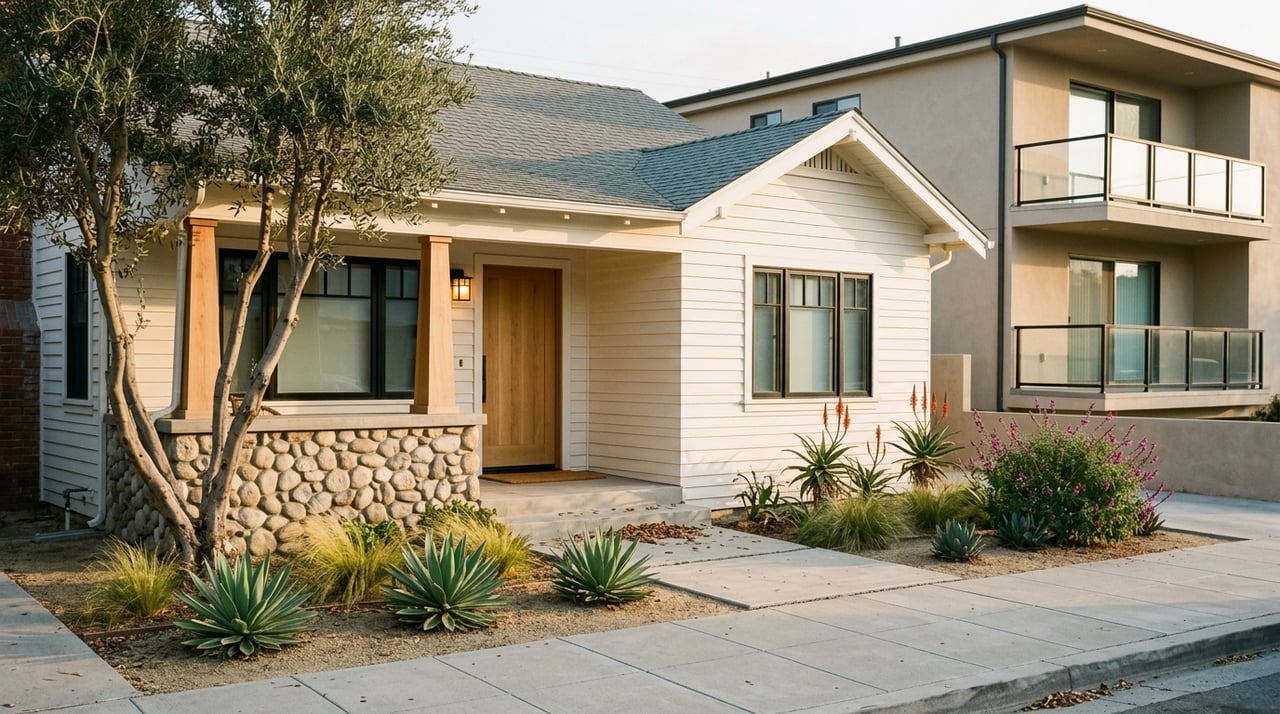
Hillcrest offers variety in a compact setting. Near the commercial core, condos and apartment buildings are most common, while older homes tend to appear on quieter surrounding streets.
That range can appeal to different kinds of buyers. You may be looking for a lower-maintenance condo close to dining and transit, or you may prefer an older home with more architectural character just outside the busiest blocks.
Historic Character Still Matters
Part of Hillcrest’s appeal is that its identity has depth. The City’s historic preservation work includes a draft Hillcrest LGBTQ+ Historic Context Statement focused specifically on Hillcrest and LGBTQ+ history, creating a framework for identifying and evaluating built historic resources.
In practical terms, that helps explain why preserved buildings, older facades, and neighborhood character remain such an important part of the area’s appeal. For many buyers, Hillcrest offers a sense of place that feels established rather than manufactured.
More Housing Options Near Transit
The City Council adopted the Hillcrest Focused Plan Amendment on July 30, 2024, and associated ordinances took effect on December 1, 2024. According to the City, the update was designed to add housing options near transit and services, support local businesses, strengthen connections to nearby neighborhoods, and preserve resources tied to LGBTQ+ history.
If you are comparing Hillcrest with nearby urban neighborhoods, this is useful context. It suggests that future housing growth and public-space improvements will likely continue shaping the neighborhood experience over time.
Getting Around Without Overthinking It
One of Hillcrest’s biggest lifestyle advantages is that car-light living is realistic. San Diego MTS frames Hillcrest-area transit as a way to skip parking challenges along University Avenue, which is a practical consideration if you plan to spend a lot of time in the neighborhood core.
Route 10 serves Old Town, Hillcrest, and La Mesa with service every 15 minutes most weekdays and every 20 to 30 minutes on weekends. Route 11 runs through Hillcrest and nearby neighborhoods seven days a week, and Route 3 connects UC San Diego Medical Center in Hillcrest with downtown-area and east-side transit points, including Balboa Park and the trolley network.
Still Expect Some Transition
It is also important to go in with clear expectations. Between the Focused Plan Amendment and the ongoing Pride Promenade work, some blocks are evolving, and access, event footprints, and parking patterns can shift over time.
That does not make the neighborhood harder to understand. It simply means your weekend visit should include observation. Notice where construction, street design, or event activity may affect how a block functions now versus how it may function later.
Signature Events Add Identity
If you are lucky enough to visit during a neighborhood event, you will get another layer of Hillcrest’s personality. The City identifies CityFest and San Diego Pride as major Hillcrest traditions, and the Hillcrest Business Association also lists recurring activations such as Hillcrest Sunday Funday, Taste of Hillcrest, Hillcrest Taste ’n Tinis, Shop Hillcrest for the Holidays, and Nightmare on Normal Street.
These events help illustrate an important point for future residents. Hillcrest is not just a place where people live near amenities. It is a neighborhood with visible traditions, active public life, and a strong local identity.
How to Tour Hillcrest Like a Buyer
If you are seriously considering a move, approach your weekend with a bit of structure. You do not need to over-plan, but you do want to test how the neighborhood feels at different times and in different settings.
A smart visit might include:
- Walking Fifth Avenue and University Avenue during the day
- Exploring a few quieter residential blocks nearby
- Visiting on Sunday morning during farmers market hours
- Checking nearby park access and how long it takes to get there
- Noting transit stops and how comfortable the car-light option feels
- Returning in the evening to see how the neighborhood changes after dark
That kind of visit gives you more than a first impression. It helps you evaluate whether Hillcrest fits the pace, convenience, and character you want in your next home base.
Why Hillcrest Appeals to Relocating Buyers
For relocating buyers especially, Hillcrest can be compelling because it makes everyday life easier to picture quickly. In one compact area, you can experience dining, services, public activity, transit access, and nearby green space without needing a full week to decode the neighborhood.
That clarity can be valuable when you are comparing options across San Diego. A weekend in Hillcrest often gives you a strong read on whether you want a neighborhood that feels active, connected, and distinctly urban while still offering residential variety and established character.
If you are considering Hillcrest or comparing it with other San Diego neighborhoods, Jennifer Allen offers a refined, high-touch approach backed by deep local insight and legally informed guidance to help you make a confident move.
FAQs
What is Hillcrest in San Diego known for?
- Hillcrest is known for its pedestrian-oriented commercial core, award-winning restaurants, trendy stores, medical offices, two major hospitals, active street life, and San Diego’s largest concentration of LGBTQ-owned businesses.
What can you do on a weekend in Hillcrest?
- A typical Hillcrest weekend can include coffee or brunch, the Sunday farmers market, time in nearby public space such as Balboa Park, and dinner or evening plans in the neighborhood core.
When is the Hillcrest Farmers Market open?
- The City’s 2026 event listing shows the Hillcrest Farmers Market on Sundays from 9 a.m. to 2 p.m. on University Avenue between Herbert Street and Park Boulevard, with additional Center Street closures during market hours.
What types of homes are in Hillcrest?
- Hillcrest includes a mix of older homes, newer apartments, condominiums, and mixed-use residential buildings, with condos and apartments more common near the commercial core.
Is Hillcrest a good neighborhood for car-light living?
- Car-light living is realistic in Hillcrest because the neighborhood is walkable in its core and served by MTS routes including 10, 11, and 3, which connect Hillcrest to Old Town, downtown-area transit points, Balboa Park, and other nearby neighborhoods.
Is Hillcrest changing right now?
- Yes. The 2024 Hillcrest Focused Plan Amendment and the ongoing Pride Promenade project show that the neighborhood is continuing to evolve through housing, mobility, and public-space updates.